Introduction
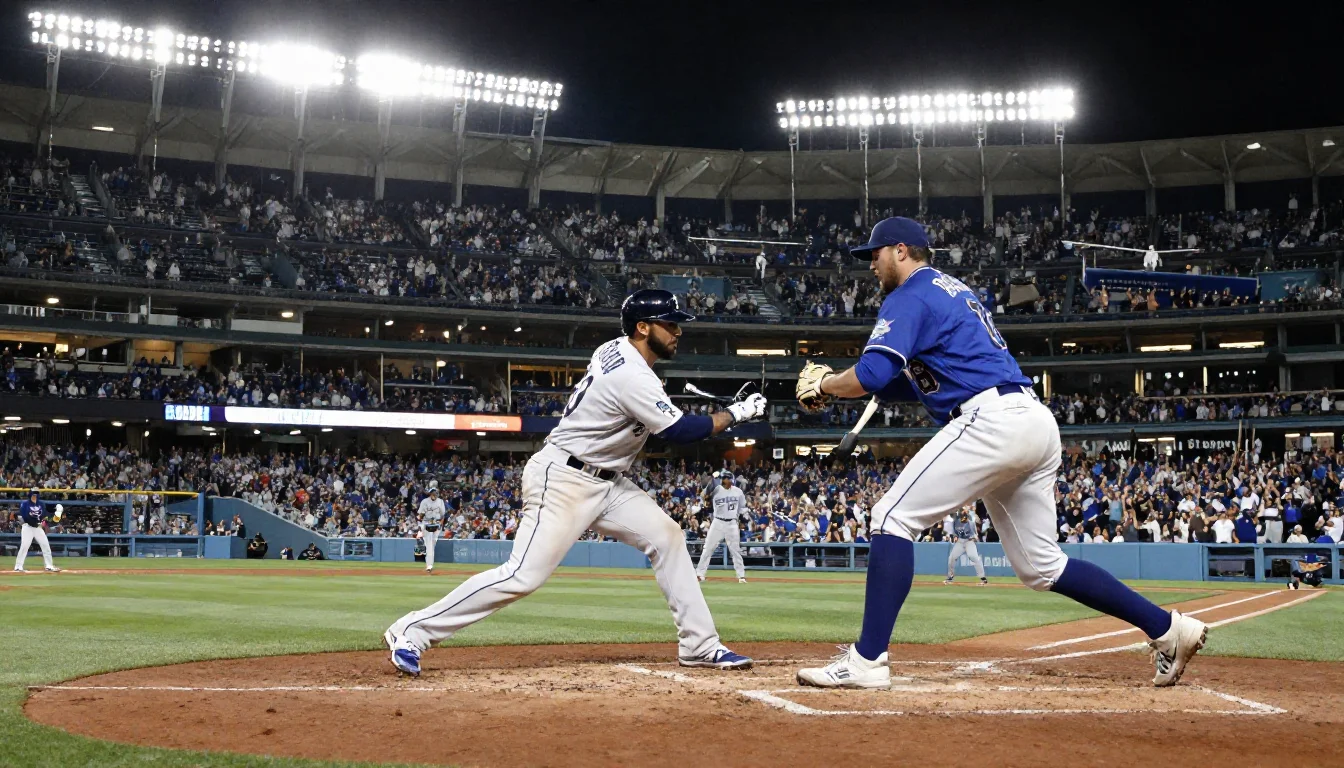
There are playoff series you remember for a week. Then there are playoff series you remember for a lifetime. The 2025 National League Championship Series between the dodgers vs brewers belongs firmly in the second category, not because of how long it lasted, but because of what happened inside four extraordinary games.
The Los Angeles Dodgers swept the Milwaukee Brewers 4-0 in the NLCS, but the scoreline does not even begin to tell the real story. What unfolded across those four games featured some of the most dominant pitching performances in postseason history, a Milwaukee team that dominated the Dodgers 6-0 in the regular season suddenly going completely silent at the plate, and the single most astonishing individual performance any player has delivered in October baseball in a very long time.
This article covers every angle of dodgers vs brewers. You will find the complete game-by-game breakdown, the key stats, the quotes and reactions, the expert analysis of why the series went the way it did, and what both franchises do next. Whether you watched every pitch or are catching up now, this is the definitive guide to one of the most memorable NLCS matchups in recent memory.
Background: How Dodgers vs Brewers Got to the NLCS
Before you understand what happened in the series, you need to understand how strange and compelling the backdrop was.
The Regular Season Contradiction
The regular season narrative going into dodgers vs brewers was genuinely shocking for Dodgers fans. The Brewers were the NL’s top seed, finishing the regular season with a 97 to 65 record. The Dodgers finished third in the National League with a 93 to 69 record.
More strikingly, the Brewers had swept the Dodgers completely in all six regular-season meetings between the two teams. The Los Angeles Dodgers had not beaten Milwaukee once during the entire 2025 regular season. That kind of historical dominance in head-to-head meetings during the regular year created a fascinating psychological backdrop for a postseason series.
The Brewers offense had been one of baseball’s most effective during the regular season. They ranked third in the entire major leagues in runs scored despite finishing 22nd in home runs. This was a team that won with contact, discipline, and speed rather than power. That approach had been devastatingly effective against the Dodgers in the summer months.
Why Blake Snell Changed Everything
One critical piece of context explains much of what followed in the postseason. Blake Snell was injured and unavailable to pitch in July when the Los Angeles Dodgers lost all six of their regular-season meetings with the Milwaukee Brewers.
Snell returning healthy for October changed the entire pitching equation for the Dodgers. Add Yoshinobu Yamamoto, Tyler Glasnow, and Shohei Ohtani to that rotation, and you suddenly have one of the deepest and most talented four-man pitching lineups any team has assembled for a postseason run in years.
The stage was set for dodgers vs brewers in the most intriguing possible way. Regular-season dominance for Milwaukee. A healthy and fully armed Dodgers rotation for October. Something had to give.
What Happened: The Full Series Game by Game
Game 1: Dodgers 2-1 Brewers, October 13, 2025
The series opened in Milwaukee, and immediately the tone was set by dominant Dodgers pitching.
Blake Snell, the man whose absence had cost the Dodgers dearly in the regular-season matchups, was healthy and devastating from the first inning. He delivered a one-hit gem of a performance that completely silenced a Milwaukee offense that had tormented Los Angeles all summer.
The Dodgers won 2-1 in a tightly contested opener where pitching controlled everything. The Brewers committed a notable baserunning mistake that contributed to an unusual 8-6-2 double play, one of the stranger defensive plays you will see in any postseason game. That miscue cost Milwaukee dearly in what was always going to be a low-scoring, tightly managed contest.
The Dodgers bullpen was sharp in protection mode. Roki Sasaki, the highly regarded rookie whose season had been interrupted by an extended IL stint, emerged as the team’s premier postseason closer and finished the game cleanly. His development into a reliable ninth-inning option had been one of the quiet storylines of the Dodgers’ playoff run.
Game 2: Dodgers 5-1 Brewers, October 14, 2025
Game 2 produced one of the genuine individual pitching gems of the entire 2025 postseason.
Yoshinobu Yamamoto threw a complete game three-hitter, the first postseason complete game in eight years. He dominated the Brewers offense from start to finish and gave the Dodgers lineup all the support they needed with a masterclass in pitching craft and composure.
Teoscar Hernandez hit a crucial home run, sending a 3-2 curve over the left-field wall for his fourth home run of the postseason. He had been part of a baserunning mistake in Game 1, so watching him deliver offensively in Game 2 was a meaningful redemption moment within the series.
Andy Pages, who had been 1 for 27 in the postseason before this game, delivered a clutch double that scored a run and changed the complexion of the inning. Muncy extended the lead with a two-out home run in the sixth. Ohtani added an RBI single and Tommy Edman contributed another late in the game.
Freddy Peralta pitched well for Milwaukee but was let down by the complete silence of the Brewers offense around him. The two-game sweep in Milwaukee meant the series shifted to Los Angeles with the Dodgers controlling everything about the narrative.
Game 3: Dodgers 3-1 Brewers, October 16, 2025
Back at Dodger Stadium in front of 51,251 fans, the Dodgers took a commanding 3-0 series lead with another pitching masterpiece.
Tyler Glasnow started and was excellent, allowing three hits and three walks across 5 and two-thirds innings while striking out eight batters. He left to a standing ovation from the packed home crowd. Alex Vesia followed Glasnow and recorded two outs for his second win of the entire playoffs.
Shohei Ohtani tripled to start the bottom of the first inning and scored on a Mookie Betts double to give the Dodgers an early lead. Jake Bauers tied the score with an RBI single in the second, giving Milwaukee a brief moment of hope.
The key moment came in the sixth inning. Tommy Edman hit a tiebreaking single off hard-throwing rookie Jacob Misiorowski, driving in the go-ahead run in what became a two-run inning that gave the Dodgers breathing room they never relinquished.
Milwaukee closer Abner Uribe made a wild pickoff throw past first base, allowing Freddie Freeman to score in another damaging error by the Brewers bullpen. It was the second straight game where an error by the Brewers closer had cost Milwaukee runs. Those moments of breakdown, when combined with the Dodgers’ relentless starting pitching quality, made recovery impossible.
Roki Sasaki pitched a perfect ninth inning for his third save of the entire postseason.
Milwaukee, which had swept the Dodgers 6-0 during the regular season, now found itself one loss from elimination. The Brewers had also lost their last 10 postseason road games dating back to 2018, a stat that added even more pressure as they faced elimination in Los Angeles.
Game 4: Dodgers 5-1 Brewers, October 17, 2025
Then came the night that nobody who witnessed it will ever forget. The night Shohei Ohtani became something beyond even what baseball fans had imagined possible.
The full breakdown of Game 4 appears in its own dedicated section below, because what happened deserves more than a paragraph.
Key Details: Stats, Scores, and Series Numbers
Here is everything you need in clean, clear summary form:
Series result: Los Angeles Dodgers defeated Milwaukee Brewers 4-0 in the 2025 NLCS
Individual game scores:
Game 1: Dodgers 2, Brewers 1 in Milwaukee
Game 2: Dodgers 5, Brewers 1 in Milwaukee
Game 3: Dodgers 3, Brewers 1 in Los Angeles
Game 4: Dodgers 5, Brewers 1 in Los Angeles
Pitching statistics for the series:
Los Angeles starters combined to pitch 28 and two-thirds innings across the four games. They allowed just 2 earned runs total and recorded an extraordinary 35 strikeouts combined. That is a starting pitching performance of almost unreal collective quality across a four-game series.
Milwaukee scored just 4 runs across 4 games despite being the NL’s third-ranked offense in regular-season run production. The Brewers managed only 3 runs in the first three games combined before scoring one in the series finale.
Notable individual achievements:
Shohei Ohtani was named NLCS Most Valuable Player. Yoshinobu Yamamoto threw the first postseason complete game in 8 years. Roki Sasaki recorded 3 saves as the Dodgers’ unexpected postseason closer. Teoscar Hernandez hit 4 home runs total in the postseason heading into Game 4.
Shohei Ohtani’s Historic Game 4 Performance
There are nights in sports that stop time. October 17, 2025 at Dodger Stadium was one of those nights.
Shohei Ohtani took the mound as the starting pitcher for Game 4 of the NLCS. In the first inning alone, he demonstrated the full scope of what makes him unlike any athlete in the history of the sport.
As a pitcher in the first inning, he worked around a leadoff walk by striking out the next three batters in order. Jackson Chourio went down swinging on a 100.3 mph fastball. Christian Yelich was frozen on a 100.2 mph fastball. William Contreras was wiped out on three pitches, the last of which was a vicious 87.6 mph sweeper. Three elite hitters. Three strikeouts. First inning done.
Then Ohtani walked to the dugout, put on a batting helmet, and led off the bottom of the first inning as the designated hitter. He hit a leadoff home run 446 feet at a launch speed of 115.6 mph deep into the right-field pavilion at Dodger Stadium off Brewers starter Jose Quintana.
That moment alone made history. Ohtani became the first pitcher in Major League Baseball history to hit a leadoff home run in any game, regular season or postseason. No one had ever done it before. Nobody may ever do it again.
After Ohtani’s home run, Mookie Betts and Will Smith both singled and scored, giving the Dodgers a 3-0 lead after just one inning. The Brewers were already facing two separate 3-0 deficits simultaneously, one in the game and one in the series.
Ohtani did not stop there. He hit a second home run in the fourth inning, demolishing a cutter from Brewers reliever Chad Patrick and sending it past the right-field pavilion. Then he hit a third home run later in the game, finishing with three mammoth home runs on the night while simultaneously pitching into the seventh inning and striking out 10 Brewers batters.
He struck out batters, went back to the dugout, and hit baseballs into the stands. Three times. On the same night. In an elimination game of the NLCS.
Dodgers manager Dave Roberts delivered the quote of the entire postseason when he said afterward that this was probably the greatest postseason performance of all time. He added that there have been a lot of postseason games played, and there is a reason why Ohtani is the greatest player on the planet.
Ohtani himself was characteristically humble. Speaking through his interpreter, he said it was his turn to be able to perform.
The final score was Dodgers 5, Brewers 1. The NLCS sweep was complete. Ohtani was named the unanimous NLCS MVP essentially on the strength of that single unforgettable night.
Reactions: What Players and Coaches Said
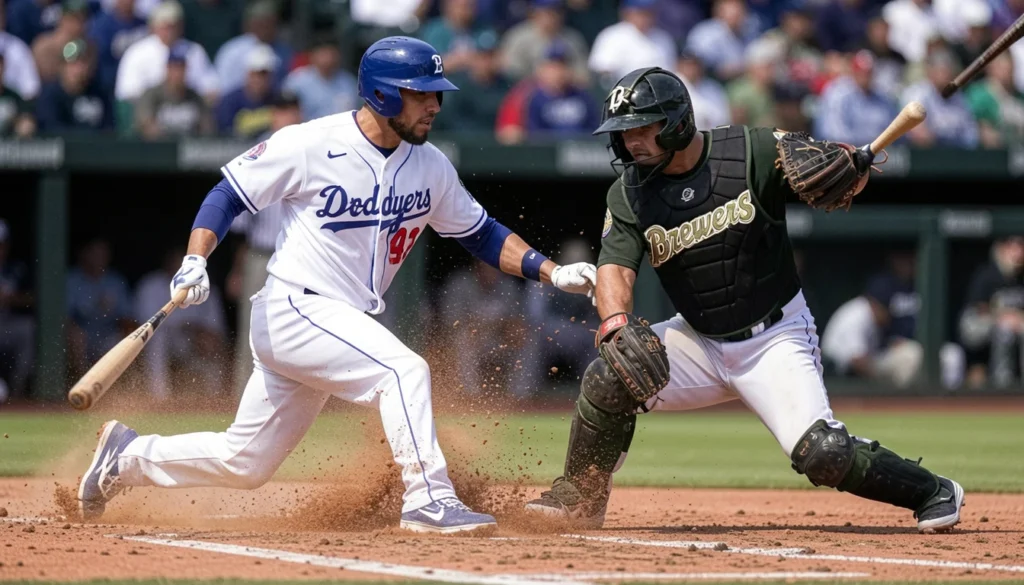
The reactions from both sides after the series ended captured the magnitude of what had just happened across these four games.
From the Dodgers side, manager Dave Roberts set the tone with his assessment of Ohtani’s Game 4 as probably the greatest postseason performance of all time. Those are words Dave Roberts clearly believed, and given what he witnessed from 10 feet away, you cannot argue with them.
Dodgers outfielder Blake Perkins offered a thoughtful perspective on why Milwaukee could not come back. He said that to beat the Dodgers four games in a row you have to do a lot of things right, that some things had to go Milwaukee’s way that simply did not, and acknowledged that Ohtani was simply great on the night. He added the question of whether Ohtani is the greatest player ever, saying he did not know, but that on that night he sure seemed like it.
From the Milwaukee side, the reactions were a combination of genuine disappointment and honest respect for what the Dodgers had accomplished.
Christian Yelich delivered the most poignant and memorable quote from any Brewer after the sweep. Looking at the Dodgers celebrating on the field after Game 4, he said that they are not that far and not as far as it seems. He said he still believes that one day it is going to be them out there celebrating instead.
Yelich’s words reflected both the hurt of elimination and the genuine belief that the Milwaukee Brewers are a franchise capable of taking that final step. His confidence in the program despite the heavy loss was a reminder that this Brewers team had legitimate reasons to believe in themselves coming into October.
The Brewers as a group expressed frustration that their disciplined, contact-driven offense simply never showed up across the four games. The approach that had worked so brilliantly all summer and had swept the Dodgers six times in the regular season completely disappeared when the postseason spotlight was brightest.
Impact: What This Sweep Means for Both Franchises
The impact of dodgers vs brewers extends well beyond four October games. This series has lasting meaning for both organizations.
Impact on the Los Angeles Dodgers
The Dodgers became the first team to win back-to-back National League pennants since the Philadelphia Phillies in 2009. They positioned themselves for a chance to become the first repeat World Series champions in a quarter-century, with the last team to achieve that being the 1998 to 2000 New York Yankees dynasty.
The sweep validated the Dodgers’ decision to build the most expensive roster in baseball history around Shohei Ohtani. His two-way capability, even used sparingly as a pitcher during the regular season due to Tommy John surgery recovery, proved decisive at the most important moment of the entire year.
The development of Roki Sasaki as a legitimate postseason closer was another significant impact. A player whose regular-season role was limited by injury had emerged as one of the most reliable high-leverage relievers in October baseball. That development has enormous implications for the Dodgers’ bullpen construction going forward.
Impact on the Milwaukee Brewers
For Milwaukee, the impact is more complicated. They won 97 regular-season games. They earned the top seed in the National League. They swept the eventual pennant winners six times during the summer. Yet they could not score more than one run in any single game of the NLCS.
The Brewers were swept in a playoff series longer than a best-of-three for the first time in franchise history. That fact stings in the context of a season that showed so much promise and produced so many wins.
The contrast between regular-season performance and postseason production is a challenge every competitive franchise wrestles with. For Milwaukee, the question of why their offense disappeared so completely against Dodgers pitching in October will dominate the offseason conversation.
Expert Analysis: Why the Dodgers Won and Brewers Lost
Let me give you the clearest analytical framework for understanding why dodgers vs brewers ended the way it did.
The single most decisive factor was pitching. The Dodgers’ four starters combined for 28 and two-thirds innings pitched, 2 earned runs allowed, and 35 strikeouts across the four-game series. That is a collective postseason pitching performance that rivals anything produced in the modern era of baseball.
Blake Snell’s presence in the rotation was the pivotal difference between the regular-season results and the playoff outcome. When he was unavailable in July, the Dodgers went 0-6 against Milwaukee. With him healthy and dominant in October, the entire equation flipped instantly.
The Brewers’ regular-season offensive approach, built on contact, discipline, and speed rather than power, proved less effective against elite postseason pitching than it had been against average regular-season starters throughout the summer. A 22nd-ranked home run offense can dominate in April, May, and June. Against Snell, Yamamoto, Glasnow, and Ohtani in a four-game series, that approach produced almost nothing.
Milwaukee also suffered from critical errors at the worst possible moments. Bullpen mistakes, wild pickoff throws, and baserunning breakdowns all occurred in high-leverage situations where the margin for error was zero. Against a team of the Dodgers’ caliber, any gift given is a gift fully collected.
The Brewers’ pitching, while competitive, simply could not match the collective depth of what the Dodgers presented. Freddy Peralta was their best option and worked hard across the series, but receiving minimal run support in multiple outings made his strong performances irrelevant to the final outcomes.
What Is Next for Both Teams
What Comes Next for the Dodgers
After sweeping dodgers vs brewers in the NLCS, the Los Angeles Dodgers advanced to the World Series with the opportunity to become baseball’s first repeat champions since the 2000 New York Yankees.
The Dodgers enter the World Series with enormous momentum. Their starting rotation is healthy and has been outstanding. Ohtani’s Game 4 performance will carry psychological weight into every at-bat and every inning of the Fall Classic. Roki Sasaki has proven himself as a legitimate postseason closer. The lineup, despite some individuals performing below expectations at various points, showed the ability to create runs when needed.
The Dodgers also carry home-field advantage into the World Series as the team that advanced from the higher-seeded conference representative position. That advantage matters in close, tightly played October baseball where every game at home can shift momentum significantly.
What Comes Next for the Brewers
For Milwaukee, the work begins immediately to understand what happened in October and how to prevent it from happening again.
Christian Yelich’s message in the locker room after the series ended was the right one for the organization. The belief that Milwaukee is not far from where the Dodgers are is grounded in legitimate evidence. A 97-win season, a top NL seed, a regular-season sweep of the pennant winners, these are not the results of a weak franchise. They are the results of a genuinely competitive organization that ran into an extraordinary opponent at the wrong moment.
The offseason questions for Milwaukee will center on two areas. First, can they add the kind of premium starting pitching depth that would allow them to better compete in a long postseason series against elite rotations? Second, can their offensive approach, which works beautifully across a 162-game season, be adapted or supplemented to produce more consistently against the very best October pitching?
Conclusion: Why Dodgers vs Brewers Will Be Remembered
The 2025 NLCS between the dodgers vs brewers delivered everything October baseball is supposed to deliver, plus one performance that transcended the sport itself.
The core takeaways from the full series are these. The Dodgers swept Milwaukee 4-0 in the NLCS despite losing all six regular-season meetings with the Brewers. Blake Snell’s healthy return to the rotation was the single most decisive factor in flipping the regular-season head-to-head results. The Dodgers’ four starters combined for 35 strikeouts and only 2 earned runs across the series. Milwaukee’s disciplined contact offense managed just 4 runs across 4 games. Shohei Ohtani delivered what Dodgers manager Dave Roberts called probably the greatest postseason performance of all time in Game 4, with 3 home runs and 10 strikeouts as both pitcher and designated hitter. And the Dodgers advanced to the World Series as the first back-to-back NL pennant winners since 2009.
Dodgers vs brewers in October 2025 will be remembered as the series where the greatest two-way player in the history of baseball proved that October is when he saves his best for last.
Which moment from the dodgers vs brewers NLCS do you think was the most memorable? Share this article with a baseball fan and let the debate begin.
Frequently Asked Questions
1. What was the final result of the Dodgers vs Brewers NLCS 2025?
The Los Angeles Dodgers swept the Milwaukee Brewers 4-0 in the 2025 National League Championship Series. Individual game scores were 2-1, 5-1, 3-1, and 5-1, all in favor of the Dodgers.
2. Who won the NLCS MVP in the Dodgers vs Brewers series?
Shohei Ohtani was named the NLCS MVP. He was selected primarily on the strength of his extraordinary Game 4 performance, in which he hit 3 home runs and struck out 10 batters while pitching into the seventh inning.
3. Did the Brewers beat the Dodgers in the regular season?
Yes. The Brewers swept the Dodgers in all six regular-season meetings in 2025 before the two teams met in the postseason. Blake Snell was injured and unavailable during those summer games, which significantly contributed to the Dodgers’ poor regular-season record against Milwaukee.
4. What was special about Shohei Ohtani’s Game 4 performance?
Ohtani struck out 10 batters while pitching into the seventh inning and hit 3 home runs as a designated hitter in the same game. He became the first pitcher in MLB history to hit a leadoff home run. Dodgers manager Dave Roberts called it probably the greatest postseason performance of all time.
5. Who threw the complete game for the Dodgers in the NLCS?
Yoshinobu Yamamoto threw a complete game three-hitter in Game 2, the first postseason complete game in eight years. He dominated the Brewers offense completely from start to finish.
6. How many runs did the Brewers score in the entire NLCS?
The Milwaukee Brewers scored just 4 runs across 4 games in the 2025 NLCS, despite being one of the most productive offenses in the National League during the regular season.
7. What did Christian Yelich say after the Brewers were eliminated?
Yelich said that the Brewers are not that far from where the Dodgers are and not as far as it seems. He said he still believes that one day it is going to be Milwaukee out there celebrating instead.
8. Who served as the Dodgers closer during the NLCS?
Roki Sasaki, a rookie whose starting role had been limited by injury, served as the Dodgers’ closer during the NLCS. He recorded 3 saves in the series and pitched scoreless ninth innings consistently throughout the postseason.
9. Were the Brewers ever swept in a playoff series before the 2025 NLCS?
The Brewers had never been swept in a playoff series longer than a best-of-three before the 2025 NLCS. The 4-0 sweep by the Dodgers was the first time in franchise history they lost a series of that length in such comprehensive fashion.
10. What milestone did the Dodgers achieve by winning the 2025 NLCS?
The Dodgers became the first team to win back-to-back National League pennants since the Philadelphia Phillies in 2009. They also positioned themselves for a chance to become the first repeat World Series champions since the 2000 New York Yankees.
Also Read In isalexconsanitrans.com
Email: johanharwen314@gmail.com
Author Name: Hamid Ali
About the Author: Hamid Ali is a sports journalist and baseball analyst with more than eight years of experience covering Major League Baseball, playoff series, and the stories behind the sport’s most defining moments. He specializes in bringing complex game analysis and postseason narratives to life for readers at every level of baseball knowledge, from lifelong fans to curious newcomers. His game recaps, series breakdowns, and player profiles have been read by sports audiences across multiple continents. Hamid believes that the greatest moments in sport deserve to be told with the clarity, context, and passion they have earned. When he is not writing, he coaches youth baseball, studies pitching mechanics, and follows every postseason pitch with the focused intensity of someone who genuinely loves every dimension of the game.