
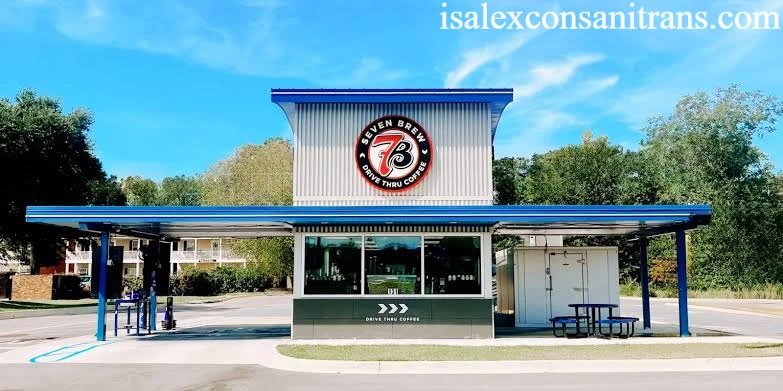
If you are researching the 7 Brew franchise cost, the biggest number to know is the estimated initial investment of roughly $940,500 to $2.28 million for a franchised location, based on 2026 FDD summaries. The commonly reported initial franchise fee is $35,000, while ongoing royalty and brand fund contributions can add a meaningful percentage of sales to your operating costs.
However, there is an important 2026 update: 7 Brew is currently not accepting new franchise applications or expressions of interest, according to the company’s official support page. The company says current franchising information is published annually in its Franchise Disclosure Document (FDD).
That means prospective operators should understand the economics now, but should not assume that submitting an application is currently possible.
Is 7 Brew a Franchise?
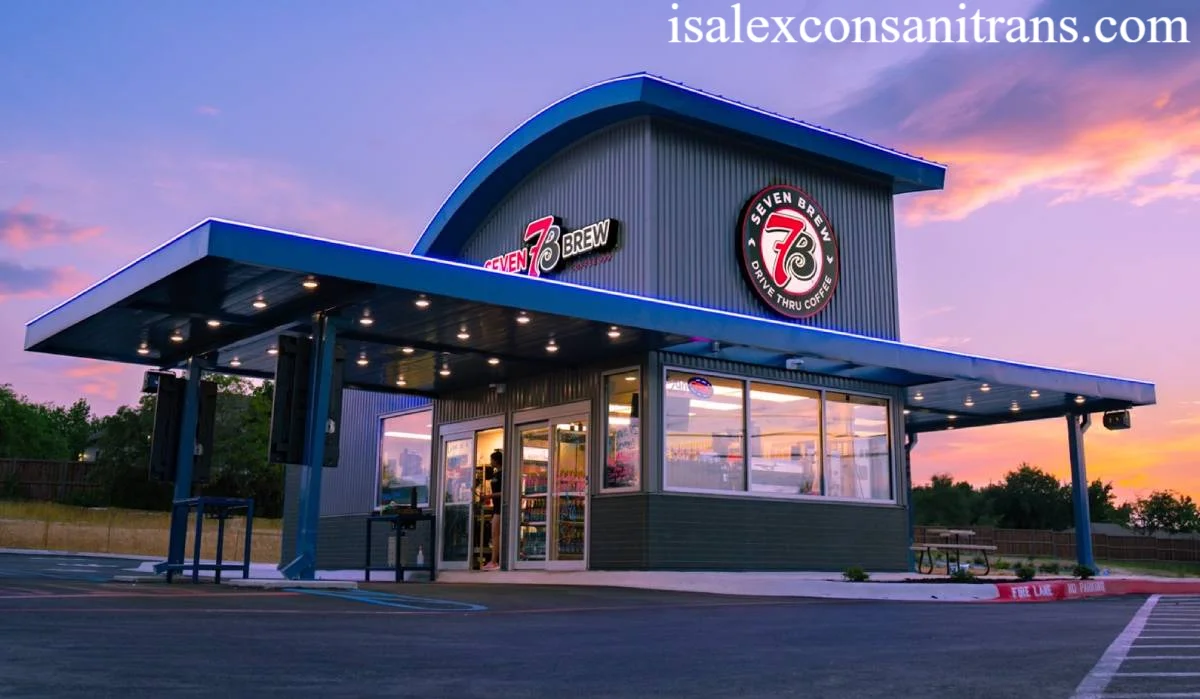
Yes. 7 Brew operates a franchise system for its high-capacity, drive-thru beverage locations. The concept focuses on quick service, customizable drinks and a relatively small physical footprint.
The brand began with its first stand in Rogers, Arkansas, in 2017. Blackstone announced a growth investment in 7 Brew in February 2024 and described the company as a rapidly expanding drive-thru beverage business working with franchise partners.
The business model is different from a traditional sit-down coffee shop. A 7 Brew location is primarily designed around drive-thru convenience, allowing the company to serve customers without requiring a large dining room.
Current availability matters: although 7 Brew franchises exist, the company states that it is not currently accepting new franchise applications.
How Much Does a 7 Brew Franchise Cost?
The estimated 7 Brew franchise cost is approximately $940,500 to $2,283,500, depending on the location, construction requirements, site development and other startup expenses.
A typical investment can include:
| Expense | Estimated Cost |
|---|---|
| Initial franchise fee | $35,000 |
| Rent and security deposit | $5,000–$20,000 |
| Building/build-out | $305,000–$650,000 |
| Site development | $200,000–$800,000 |
| Architecture and engineering | $10,000–$60,000 |
| Equipment, fixtures and furniture | $185,000–$250,000 |
| Signs | $10,000–$40,000 |
| POS system | $25,000–$30,000 |
| Opening inventory and supplies | $15,000–$50,000 |
| Permits | $2,500–$25,000 |
| Training travel and living | $10,000–$75,000 |
| Utilities | $500–$2,500 |
| Insurance | $2,500–$6,000 |
| Startup marketing | $20,000–$75,000 |
| Additional funds | $25,000–$75,000 |
The exact total depends heavily on real estate and construction. Site development alone can represent hundreds of thousands of dollars, which explains much of the difference between a lower-cost and higher-cost project.
What Is the 7 Brew Initial Franchise Fee?
The commonly reported 2026 figure for the initial franchise fee is $35,000. Current franchise databases tracking the 2026 FDD also report a total investment range of approximately $941,000 to $2.28 million.
The franchise fee is only one part of the startup budget. It does not cover the building, land or lease costs, equipment, site work, inventory, permits, insurance and working capital.
This distinction is important when comparing 7 Brew with other coffee franchise opportunities. A $35,000 franchise fee does not mean you can open a location for $35,000.
What Are the Ongoing 7 Brew Franchise Fees?
The ongoing royalty structure reported in franchise documentation is tied to weekly gross sales. Historical and current FDD summaries describe a tiered structure of approximately 4.5%, 5.5% or 7%, depending on weekly sales.
A separate brand fund contribution is also reported at up to 2% of gross sales in FDD-related sources.
This means a franchise owner needs to account for more than the initial investment. Royalty and advertising contributions come out of revenue before calculating the owner’s actual operating profit.
For example, if a store generated $2 million in annual gross sales, a 4.5% royalty would equal approximately $90,000 before considering other expenses. A 2% brand fund contribution would represent another $40,000 if charged at the full 2% rate.
These are illustrations, not predictions of what a particular location will pay.
How Much Revenue Does a 7 Brew Franchise Make?
Revenue figures should not be confused with owner income.
The 2026 FDD reporting summarized by franchise research sources includes an Item 19 financial performance representation. One current summary reports a median unit volume of approximately $2.6 million for a defined group of measured stores.
The measurement group matters. The reported figure was based on stores that were open and operating for the entire fiscal year, rather than every location in the system. Newly opened locations were excluded from that particular calculation.
Therefore, it would be misleading to say every 7 Brew franchise makes $2.6 million per year.
Instead, prospective franchisees should treat the disclosed unit-volume figure as a benchmark and examine the FDD’s methodology carefully.
What Is the 7 Brew Franchise Profit?
There is no single guaranteed 7 Brew franchise profit figure.
Revenue is the money generated by the store. Profit is what remains after expenses such as:
- Employee wages and payroll taxes
- Rent or property costs
- Ingredients and supplies
- Utilities
- Insurance
- Maintenance
- Royalty payments
- Brand or advertising contributions
- Local marketing
- Technology and POS expenses
- Loan payments and interest
- Taxes
- Other operating expenses
This is why a location generating more than $2 million in annual sales does not automatically mean the owner takes home hundreds of thousands of dollars.
A useful franchise profitability analysis should calculate operating expenses and debt service separately rather than applying a generic profit margin to sales.
What Are the 7 Brew Franchise Requirements?
The financial and operational requirements should be confirmed directly against the latest FDD and franchise agreement because requirements can change.
The larger issue for prospective owners in 2026 is availability. 7 Brew’s official support page currently says it is not accepting new franchise applications or expressions of interest.
If applications reopen, a prospective franchisee would generally need to demonstrate sufficient financial resources, obtain an approved location and satisfy the franchisor’s development and operational requirements.
Anyone seriously considering the concept should request and review the latest FDD before making financial commitments.
How Does the 7 Brew Business Model Work?
7 Brew is primarily a drive-thru coffee and beverage business rather than a traditional café.
Its menu includes coffee and espresso-based drinks as well as teas, chillers, energy drinks, sodas and other beverages. Blackstone described the company as a next-generation drive-thru beverage business focused on convenience and customer experience.
The model can provide several operational advantages:
- Small footprint: A drive-thru-focused building generally requires less customer seating.
- Fast service: Customers can order and receive beverages without entering a large restaurant.
- High beverage variety: Customization creates a broad menu without requiring a full restaurant kitchen.
- Repeat purchases: Coffee and beverage businesses can benefit from frequent customer visits.
- Technology: Mobile ordering and loyalty features can support repeat business at participating locations.
The model still depends heavily on traffic, visibility, local competition, labor availability and site economics.
What Does It Cost to Build a 7 Brew Location?
Construction and site development can be among the largest components of the 7 Brew startup cost.
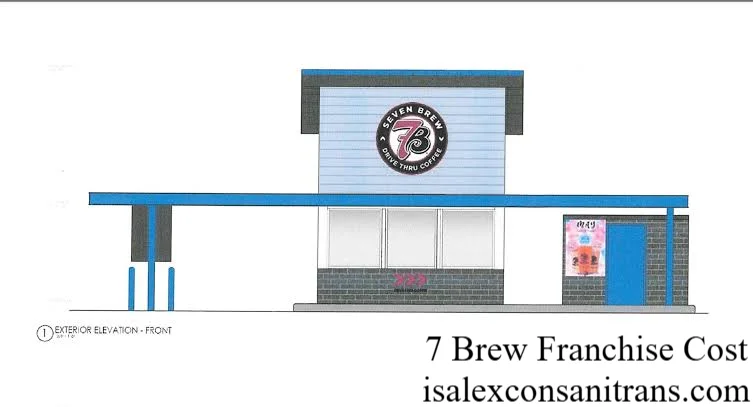
The investment estimates supplied in current franchise summaries put building and build-out costs at roughly $305,000 to $650,000, while site development can range from approximately $200,000 to $800,000.
The wide ranges show why two locations can have very different project budgets.
Land conditions, utility work, permitting, local construction prices, traffic requirements and site preparation can all affect the final cost.
For this reason, an investor should not build a financial model using only the midpoint of the published investment range.
How Can You Finance a 7 Brew Franchise?
Potential franchise financing can include:
- SBA-backed financing
- Conventional business loans
- Commercial real estate financing
- Equipment financing
- Personal capital
- Investor equity
- Combination financing structures
An SBA loan for a 7 Brew franchise may be considered by an eligible borrower, but approval is not automatic. Lenders will evaluate factors such as creditworthiness, liquidity, collateral, business experience and repayment ability.
Because the project can require more than $1 million, financing costs can have a major effect on the owner’s eventual cash flow.
A strong financial model should therefore include:
Initial investment + financing amount + interest expense + operating expenses + royalty fees + advertising contributions + expected sales.
What Is the 7 Brew Payback Period?
There is no guaranteed 7 Brew franchise payback period.
A simple payback calculation would divide the amount invested by annual cash flow available to the owner. But real-world results depend on sales growth, construction overruns, rent, labor costs, financing and the time required for a new location to reach mature sales levels.
For example, two stores with identical construction costs could have very different payback periods if one has substantially stronger traffic and lower operating expenses.
Do not treat a generic three-to-seven-year franchise payback estimate as a guaranteed 7 Brew result unless it is specifically supported by the current FDD.
7 Brew Franchise vs. Other Coffee Franchises
If 7 Brew is unavailable to new applicants, prospective owners may also research other coffee shop franchise and drive-thru beverage concepts.
When comparing alternatives, look beyond the franchise fee.
Consider:
| Factor | Why It Matters |
|---|---|
| Total investment | Shows the true startup requirement |
| Franchise fee | One-time entry cost |
| Royalty | Reduces ongoing gross sales |
| Advertising fee | Additional recurring expense |
| AUV/revenue | Helps assess sales potential |
| Profit disclosures | More useful than revenue alone |
| Territory | Affects local competition |
| Build-out | Can dramatically change capital needs |
| Training | Reduces operational learning curve |
| Financing | Determines debt burden |
| Store footprint | Affects rent and construction |
This approach gives you a better picture of the business than comparing franchise fees alone.
Who Owns 7 Brew?
7 Brew has attracted institutional investment as it has expanded. In February 2024, Blackstone announced a growth equity investment in 7 Brew and said the investment was intended to support the company’s continued expansion alongside franchise partners.
Because ownership structures can change through investments and corporate transactions, prospective franchisees should rely on the current FDD and official corporate disclosures for the latest legal ownership information.
7 Brew Franchise FDD: What Should You Check?
The 7 Brew Franchise Disclosure Document is one of the most important documents for anyone evaluating the business.
Pay particular attention to:
- Item 5: Initial franchise fees
- Item 6: Other fees and recurring payments
- Item 7: Estimated initial investment
- Item 11: Franchisor assistance and advertising
- Item 17: Renewal, termination and other contractual terms
- Item 19: Financial performance representation
- Item 20: Franchise outlet information
- Item 21: Financial statements
- Item 22: Franchise agreements and related contracts
The FDD can reveal details that a short online franchise summary cannot.
Most importantly, use the latest version rather than relying on an older article. 7 Brew’s official website states that current franchising information is published annually through its FDD.
Frequently Asked Questions
How much does a 7 Brew franchise cost?
The current 2026 investment range is approximately $940,500 to $2.28 million, with the commonly reported initial franchise fee at $35,000. Actual costs depend heavily on the site, construction and development requirements.
How much does it cost to open 7 Brew?
Opening a location can require roughly $940,500 to $2.28 million in total initial investment, according to current 2026 FDD summaries.
How much does a 7 Brew franchise make?
A 2026 FDD summary reports a median unit volume of approximately $2.6 million for a defined group of measured stores. This represents sales volume, not owner profit.
What is the 7 Brew franchise fee?
The commonly reported 2026 initial franchise fee is $35,000. Prospective franchisees should verify the exact amount in the FDD applicable to their agreement.
What are the 7 Brew royalty fees?
Current FDD summaries report a tiered royalty structure of approximately 4.5% to 7% of gross sales, depending on weekly sales, with a separate brand fund contribution also reported.
Is 7 Brew currently accepting franchise applications?
No. As of the latest official information available in September 2026, 7 Brew says it is not accepting new franchise applications or expressions of interest.
Who owns 7 Brew?
Blackstone announced a growth equity investment in 7 Brew in February 2024. The company’s current ownership structure should be verified through the latest FDD and corporate disclosures.
Is a 7 Brew franchise profitable?
Profitability depends on sales, labor, rent, construction costs, royalties, advertising contributions, financing and other expenses. Revenue or AUV alone cannot establish what an individual franchise owner will earn.
Final Takeaway
The 7 Brew franchise cost is substantial. A prospective operator should plan around an estimated investment of approximately $940,500 to $2.28 million, rather than focusing only on the $35,000 franchise fee.
The business has a drive-thru-focused model and has expanded rapidly through franchising and investment. However, the most important 2026 consideration is that 7 Brew is currently not accepting new franchise applications.
For anyone evaluating the opportunity, the best next step is to study the latest FDD, especially Items 5, 6, 7, 19 and 20, and build a location-specific financial model. A strong sales figure does not guarantee strong profit, and the difference between revenue and owner cash flow can be significant.
Author Bio: Hamid Ali is a business and franchise writer covering startup costs, franchise investments, revenue, and small business opportunities. His work focuses on turning complex financial and franchise information into clear, practical insights for entrepreneurs.
Author Name: Hamid Ali
Email: johanharwen314@gmail.com
Also Read: