The hard part of starting a company is rarely a shortage of ideas. It’s finding one that matches the money, time, and skills you have right now. A $200 side hustle and a $50,000 franchise are very different bets, and the right choice depends on your situation.
This guide groups options by what they require from you, so you can narrow the list quickly instead of scrolling through hundreds of generic suggestions.
How Do You Choose the Right Business Idea?
Choose an idea where your existing skills, available startup capital, and a proven customer need overlap. Test any idea against four questions:
- Can I sell it within 30 days? Ideas that need months of building before the first sale are riskier.
- What are the startup costs? Be honest about equipment, software, licenses, and insurance.
- Does it use a skill I already have, or one I can learn cheaply?
- Will people pay for it repeatedly? Recurring clients, such as monthly bookkeeping, are easier to grow than one-off sales.
In my view, the most common mistake is picking a trendy idea with no personal edge. A mediocre idea you can execute well usually beats a brilliant one you can’t.
Online Business Ideas With Low Startup Costs
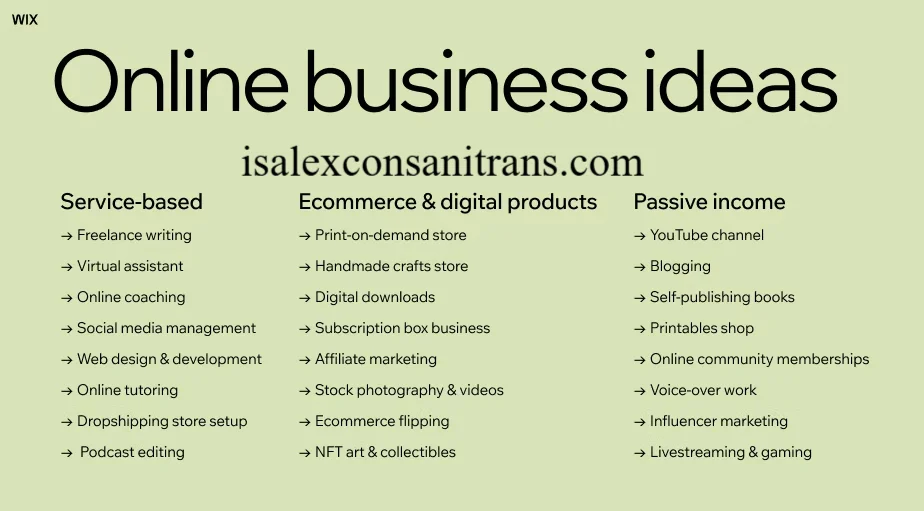
Online models suit people who want to start small, work from home, or keep a day job while testing the market. Typical startup costs for most of these run from under $100 to a few hundred dollars (my estimate).
| Idea | Typical startup cost | Best for |
|---|---|---|
| Freelance writing or editing | Under $100 | Writers, editors |
| Graphic design | $0–$300 (software) | Designers |
| Web development | $0–$500 | Coders, no-code builders |
| Social media management | Under $200 | Marketers |
| Online tutoring | Under $100 | Students, teachers |
| Online course | $100–$1,000 | Subject experts |
| Affiliate marketing | Under $200 | Bloggers, reviewers |
| Online reselling | $50–$500 | Thrifters, collectors |
Freelance and Agency-Style Services
Freelance services are the fastest way to turn a skill into income. Platforms like Upwork and Fiverr can help you find your first clients, though many freelancers eventually build direct relationships to avoid platform fees and competition.
- Content and editorial contracting: Blogs, newsletters, and brands need writers and editors. Specializing in one industry, such as healthcare or software, lets you charge more.
- Graphic design: Logos, social graphics, and presentations are steady work. Tools like Canva and Adobe’s Creative Cloud lower the barrier.
- Web development: Small businesses constantly need new sites and updates. Maintenance retainers create predictable monthly income.
- Social media management and marketing agency work: Many local businesses lack time to post consistently. Start by managing one platform for a few clients, then expand into a full marketing agency as you add people.
- Virtual assistance: Email, scheduling, and bookkeeping support are in steady demand from busy founders.
Creator and Education Businesses
- YouTube channel: Income can come from ads, sponsorships, and products, but the YouTube Partner Program has eligibility thresholds, so expect a slow start.
- TikTok creator and UGC for brands: Brands pay creators to produce authentic-looking video content for their own ads. You don’t need a large following, just good video skills and a portfolio.
- Podcasting: Revenue usually comes from sponsorships or a related service, and it takes time to build an audience.
- Online course: Package expertise you already have. Validate demand first by teaching a small paid cohort.
- Tutoring: Students can tutor peers or younger learners, which makes it one of the easiest business ideas for students.
Product-Based Online Models
- Affiliate marketing: You earn commissions by recommending products. The FTC requires clear disclosure of affiliate relationships.
- Online reselling: Buying low and selling on eBay, Etsy, or similar marketplaces rewards patience and research.
- Dropshipping: You sell products without holding inventory. Margins are often thin and competition is high, so treat it as a marketing business rather than easy money.
Service Business Ideas for Local Markets
Local service businesses work well because customers pay for convenience and reliability, not novelty. They often need more equipment than online models but face less online competition.

- Cleaning service: Low startup cost and repeat customers. Residential, office, and move-out cleaning are common niches.
- Landscaping business: Strong seasonal demand, but you’ll need a mower, trimmer, trailer, and likely commercial insurance.
- Event planning: Weddings, birthdays, and corporate events reward organization. Start by assisting an established planner.
- Personal training: Certifications from organizations such as NASM or ACE build credibility. Online coaching can supplement in-person clients.
- Pet sitting and dog walking: Simple to launch, though insurance and reliable backup care matter.
- Photography: Portrait, product, and real estate photography are practical entry points.
- Professional organizing: Helping people declutter homes and offices is a growing niche with minimal equipment.
Professional and Asset-Based Business Ideas
These typically require credentials or more capital, but they can support higher rates.
- Accounting and tax services: Small businesses want year-round help. Preparing taxes generally requires a PTIN from the IRS, and representing clients may require additional credentials.
- Business consulting: If you have deep industry experience, consulting can work with almost no overhead.
- Financial planning: This is a regulated field. Advising clients usually means licenses and registration, so research requirements before marketing yourself.
- Real estate and property management: Property managers earn fees for handling tenants and maintenance for owners. Rules vary by state, and some require a real estate license.
- Franchise business: You buy a proven system, training, and brand. The tradeoff is upfront fees and ongoing royalties. Review the Franchise Disclosure Document carefully before signing.
Which Business Ideas Work Best for Women and Students?
For women, the best option depends on schedule and capital rather than gender. Flexible, scalable models such as freelance consulting, tutoring, UGC creation, social media management, and event planning are popular choices. The SBA’s Women’s Business Centers offer free or low-cost counseling, training, and networking across the country.
For students, the best fits are low-cost, flexible, and compatible with class schedules: tutoring, freelance design or writing, social media management, online reselling, and UGC for brands. Many of these can be started from a laptop with almost no capital.
How Do You Start a Business Once You’ve Picked an Idea?
Start by validating demand, then handle the legal basics and get your first customer.
- Write a simple business plan. One or two pages covering your customer, offer, pricing, startup costs, and a 12-month revenue goal is enough for most small ventures. Lenders and investors will want more detail.
- Choose a legal structure. Sole proprietorships are simplest, while an LLC separates personal and business liability. Fees and rules vary by state, so check your Secretary of State’s website.
- Get licenses and an EIN. The IRS issues Employer Identification Numbers for free. Check city and state license requirements for your industry.
- Open a business bank account. Keeping finances separate simplifies taxes and protects your records.
- Set a marketing strategy. Pick one or two channels, such as local SEO, referrals, LinkedIn, or short-form video, and do them consistently.
- Track costs and pricing from day one. Many new owners underprice because they forget taxes, software, and unpaid admin time.
Free guidance is available from the SBA and SCORE, which pairs entrepreneurs with volunteer mentors.
How Can a Small Business Owner Grow Past the First Year?
Business growth usually comes from three moves: raising prices as demand increases, turning one-off clients into recurring ones, and systemizing tasks so you can delegate. Keep a list of your most profitable services and double down on them rather than adding more offerings.

Frequently Asked Questions
What are the most successful small business ideas?
The most consistently successful small business ideas solve a recurring problem for customers who already have budget, such as bookkeeping, cleaning, landscaping, marketing support, and tutoring. They tend to have low overhead, repeat clients, and clear pricing.
What are some successful business ideas?
Successful business ideas combine real demand with a skill you can deliver reliably. Examples include freelance design, social media management, accounting and tax services, property management, and personal training.
What are 12 unique business ideas?
Twelve less-common options: UGC creation for brands, professional organizing, podcast production, online course creation, no-code website building, pet sitting, event planning for niche audiences, bookkeeping for creators, drone photography, online reselling of vintage goods, virtual assistance for specific industries, and property management for small landlords.
What are the top 10 most successful businesses to start?
There is no single authoritative ranking, since success depends on your skills and market. Ten widely used, proven models are cleaning services, landscaping, bookkeeping and tax preparation, freelance writing or design, social media management, tutoring, personal training, property management, e-commerce reselling, and business consulting.
What are good business ideas for women?
Flexible, low-startup-cost businesses such as consulting, tutoring, UGC creation, event planning, and social media management work well. The SBA’s Women’s Business Centers provide free or low-cost mentoring and training.
What are good business ideas for students?
Students do best with low-cost, schedule-friendly ventures like tutoring, freelance writing or design, social media management, online reselling, and UGC for brands. Most can be started with a laptop and a few hundred dollars or less.
Author Bio: Hamid Ali is a business and marketing writer covering entrepreneurship, digital marketing, SEO, and small business strategies. He creates practical, easy-to-follow content that helps aspiring entrepreneurs make informed decisions and build sustainable businesses.
Author Name: Hamid Ali
Email: johanharwen314@gmail.com
Also Read: