
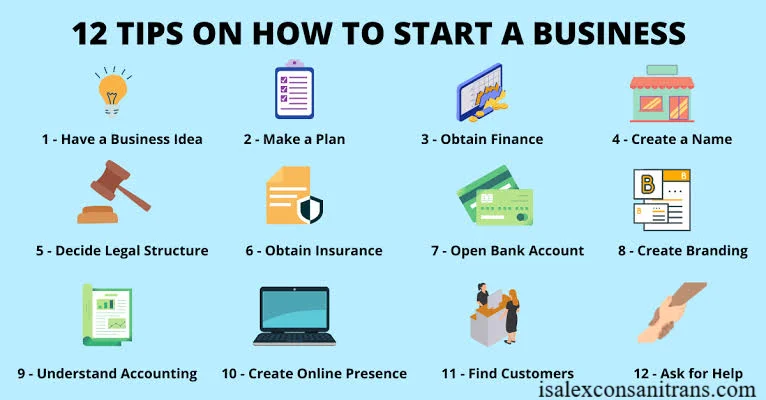
Starting a business means finding a problem people will pay to solve, testing that demand cheaply, registering the company legally, funding the launch, and then reaching your first customers. Most people can finish the setup in a few weeks. Finding customers is what takes sustained effort.
Starting is common. The U.S. Census Bureau’s Business Formation Statistics show new business applications ran at historically high levels through 2023 and 2024, at over five million a year. Surviving is harder. U.S. Bureau of Labor Statistics data has long shown that roughly one in five new employer businesses closes within its first year, and about half are gone within five years. The steps below are built around the most common reasons businesses fail: no real demand, poor cash planning, and no way to reach customers.
Step 1: Start With a Problem, Not a Product
Quick answer: The best ideas come from problems you or people near you already experience.
If you have no ideas yet, work backward from three sources:
- Your skills. What do coworkers or friends regularly ask you for help with?
- Your frustrations. What task at work or home is slow, expensive, or badly served?
- Underserved niches. Where do customers complain in reviews, forums, or social media groups?
Original insight: a business idea is rarely rare, but a specific customer is. “Bookkeeping” is crowded. “Bookkeeping for independent physical therapists” gives you a clear audience, clear language, and an easier path to word-of-mouth.

Step 2: Validate Demand Before You Spend Money
Quick answer: Talk to at least a handful of potential customers and try to get a pre-order, deposit, or waitlist signup before building anything.
Compliments aren’t validation. Payment, or a concrete commitment, is. Cheap ways to test:
- Interview 10 to 15 people who fit your target customer profile.
- Offer a simple version of the service and charge for it.
- Build a one-page website with a signup form and see who responds.
- Study competitors. Existing competition usually means demand exists, and their weaknesses show your opening.
Step 3: Write a Lean Business Plan
Quick answer: For most small businesses, a one- to two-page plan is enough. A longer plan is needed mainly for bank loans or investors.
Cover your customer, your offer, your pricing, how you’ll reach buyers, your expected monthly costs, and the revenue needed to break even. The U.S. Small Business Administration (SBA) offers free templates and guidance at sba.gov.
Step 4: How Do You Start a Business Legally?
Quick answer: Choose a structure, register with your state, get a free federal EIN from the IRS, and obtain any licenses your industry or city requires.
- Pick a legal structure. Common options:
| Structure | Liability protection | Setup complexity | Typical fit |
|---|---|---|---|
| Sole proprietorship | None (personal assets at risk) | Minimal | Testing an idea, freelancing |
| LLC | Generally yes | Moderate; state fee applies | Most small businesses |
| S corporation (a tax election) | Yes, when paired with an LLC or corporation | Higher | Profitable businesses seeking tax planning |
| C corporation | Yes | Highest | Startups planning to raise venture capital |
- Register your business name. Check your state’s business registry and trademark availability, and register a “doing business as” (DBA) name if you operate under a name different from your legal one.
- Get an Employer Identification Number (EIN). The IRS issues it for free at irs.gov. Be wary of sites that charge for it.
- Open a separate business bank account. Mixing personal and business money weakens liability protection and complicates taxes.
- Check licenses, permits, and taxes. Requirements vary by state, county, city, and industry. Sales tax registration is a common one for product sellers.
A note on reporting rules: in March 2025, FinCEN issued a rule exempting U.S.-formed companies from the Corporate Transparency Act’s beneficial ownership reporting. Rules like this have shifted repeatedly, so check FinCEN’s site for the current status. For complex situations, consult an attorney or accountant. This article is general information, not legal or tax advice.
Step 5: How Much Does It Cost to Start a Business?
Quick answer: It ranges from under a few hundred dollars for a service or online business to tens of thousands for a storefront, equipment-heavy, or restaurant business.
The legal basics are modest. State LLC filing fees vary widely, from roughly tens of dollars to several hundred, with some states charging annual fees too. Beyond that, your budget depends on the model:
- Service or freelance: a domain name, a simple website, basic software, and possibly insurance
- Ecommerce: inventory, platform fees, shipping, and payment processing
- Brick-and-mortar: lease deposits, buildout, equipment, licenses, and several months of operating cash
Build a spreadsheet with one-time costs and monthly costs, then plan for at least three to six months of expenses as a cushion. Cash flow, more than profit, is what keeps new companies alive.
Step 6: How to Start a Business With No Money
Quick answer: Sell your time or expertise first, avoid inventory, and reinvest early revenue.
- Begin with a service you can deliver using a laptop and skills you already have.
- Use pre-orders, deposits, or dropshipping and print-on-demand models to avoid buying stock upfront.
- Use free resources: SCORE offers free mentoring, and SBA-supported Small Business Development Centers (SBDCs) provide free or low-cost advising.
- Start part-time while keeping your income, so the business doesn’t need to pay your bills immediately.
Grants and loans are possible but slower and more competitive than people expect. Bootstrapping with early customers is usually the fastest route.
Step 7: How to Start a Business From Home or Online
Quick answer: Home-based and online businesses are legal in most places, but you still need registration, and you may need to check local zoning rules and homeowners association restrictions.
Popular home-based models include consulting, tutoring, design, writing, bookkeeping, cleaning, pet services, and ecommerce. For an online business, you also need:
- A business website with clear offers and contact details
- A way to accept payments securely
- Mobile optimization, since a large share of website visitors browse on phones
- Basic policies (privacy, refunds, terms)

Step 8: Build Your Online Presence (Where a Business Blog Fits)
Quick answer: A company blog helps customers find you through search engines and builds trust before they buy. It works best when you treat it as a long-term asset instead of an announcement board.
Paid ads stop the moment you stop paying. A small business blog can keep bringing organic traffic for years. Here is how to approach it:
- Write about customer problems. Pick topics your potential customers already search for. How-to articles, helpful guides, and comparisons convert better than company news.
- Target long-tail keywords. Specific phrases like “bookkeeping tips for freelance photographers” are less competitive than broad terms, and the people searching are closer to buying.
- Favor evergreen content. Articles that stay useful keep earning visitors long after you publish them. Mix in occasional industry insights tied to current events.
- Apply basic on-page SEO. Use a clear title, a meta description, tidy URLs, image alt text, short paragraphs, and internal links to related posts. Add external links to credible sources.
- Show real expertise. Google’s quality guidelines emphasize experience and expertise. Case studies, photos of your work, and honest lessons beat generic filler.
- Stay consistent. Publishing frequency matters less than a schedule you can maintain. One strong post every two weeks beats five rushed posts followed by silence.
- Promote what you publish. Share posts on the social media accounts where your customers spend time, repurpose them as short videos or newsletters, and answer reader comments. Backlinks from partners, local organizations, and industry sites help your search visibility over time.
Honest expectation: SEO is slow. New sites typically need months to gain meaningful rankings, so pair your blog with direct outreach and social channels while it builds momentum.
Step 9: Launch, Measure, and Improve
Launch small, collect feedback, and track a few numbers weekly.
Start with a soft launch to friends, colleagues, and your waitlist. Then track:
- Leads or inquiries per week
- Conversion rate from lead to customer
- Customer acquisition cost
- Monthly revenue and cash balance
Ask every early customer why they bought. Their answers will sharpen your messaging faster than any marketing course.
How to Start a Business: Common Mistakes to Avoid
- Building before validating demand
- Underpricing to compete, then having no margin
- Skipping a separate bank account or basic bookkeeping
- Ignoring marketing until the product is “perfect”
- Quitting a steady job before the business has proven income
Frequently Asked Questions
How much does it cost to start a business?
It depends on the model. A service or online business can start for a few hundred dollars covering registration, a domain, and basic tools. Inventory-based and storefront businesses can cost tens of thousands. Budget for one-time startup costs plus three to six months of operating expenses.
How to start a business from home?
Choose a service or product you can deliver from home, register your business with your state, get an EIN, and open a business bank account. Check local zoning rules and any HOA restrictions, then set up a simple website to attract customers.
How to start a business with no money?
Start with a service that uses your existing skills and equipment, take pre-orders or deposits to avoid inventory costs, and use free help from SCORE and SBDCs. Reinvest early revenue to grow.
I want to start a business but have no ideas. What should I do?
Look at your skills, your daily frustrations, and complaints in online reviews or communities. Then narrow to a specific customer group with a clear problem. Test the idea with real conversations before investing.
How to start a business for beginners?
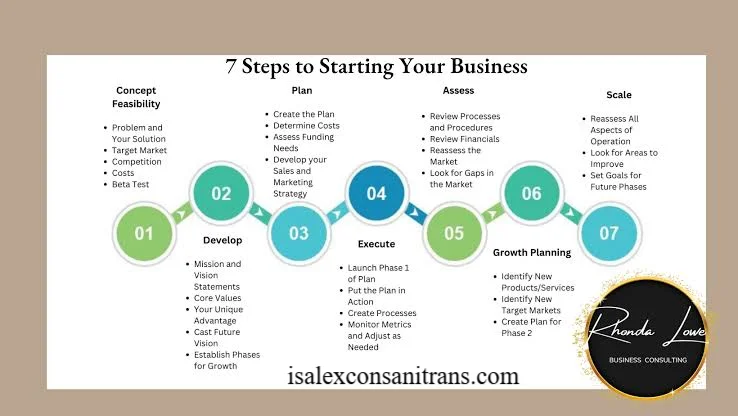
Follow a simple sequence: identify a customer problem, validate demand, write a lean plan, register legally, fund the launch, and build an online presence. Start small, learn from feedback, and scale gradually.
How to start a business online?
Pick an online model such as services, digital products, or ecommerce. Register the business, build a website, set up secure payments, and attract visitors through content marketing, SEO, and social media. A business blog helps customers find you organically.
How to start a business legally?
Choose a legal structure (such as an LLC), register your business name with your state, get a free EIN from the IRS, open a business bank account, and obtain required licenses and permits. Consult an accountant or attorney for your specific situation.
How to start a business as a teenager?
Teens can run small businesses such as tutoring, lawn care, design, or reselling. Anyone under 18 generally cannot sign binding contracts on their own, so a parent or guardian typically must co-sign or open accounts (such as a custodial bank account) and help with registration or licenses. Check your state’s rules, including any rules on work permits and taxes on earnings.
Author Bio: Hamid Ali is a business and digital marketing writer covering entrepreneurship, startups, SEO, and online business strategies. He creates practical, research-based guides that help readers understand business planning, marketing, and growth.
Author Name: Hamid Ali
Email: johanharwen314@gmail.com
Also Read:

[…] How to Start a Business in 2026 […]
[…] How to Start a Business in 2026 […]