
Hiring has changed. Candidates now research a company the same way they’d research a product before buying it — checking review sites, scrolling employee posts on social media, and comparing what a business says about itself against what current and former staff actually report. That gap between what a company claims and what people believe is exactly what employer branding services are built to close.
This guide breaks down what employer branding services actually involve, how they connect to recruitment marketing and talent acquisition, and what to look for if you’re evaluating a provider — including well-known names like Cielo and Universum’s Employer Branding Academy.
What Is Employer Branding, and Why Does It Matter Now?
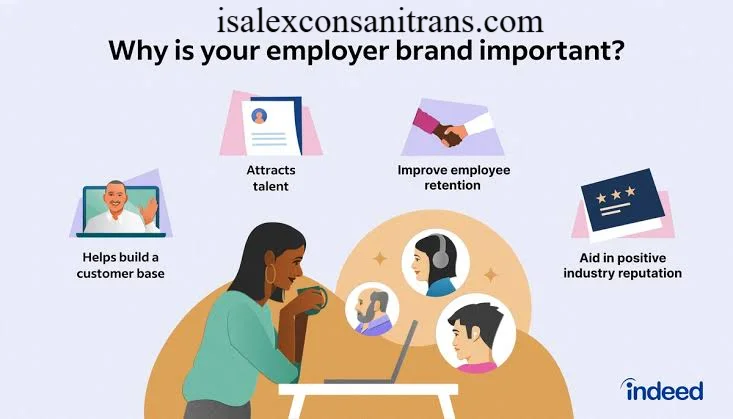
Short answer: Employer branding is the process of shaping how current employees, candidates, and the wider market perceive a company as a place to work — and it matters because it directly affects hiring cost, speed, and quality.
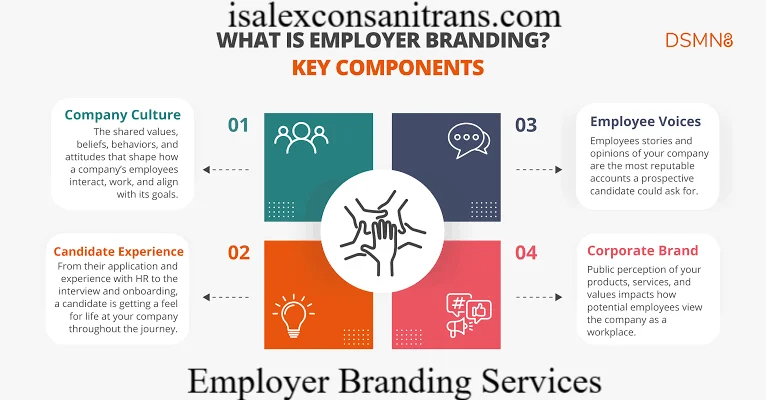
An employer brand isn’t a logo or a slogan. It’s the sum of everything a candidate or employee experiences and hears about a company’s culture, leadership, mission and values, and day-to-day working reality. A strong employer brand tends to:
- Reduce cost-per-hire by lowering dependence on paid advertising and agency fees
- Shorten time-to-fill by building a pipeline of candidates who already want to work there
- Improve employee retention, since people who join for the right reasons tend to stay longer
- Strengthen internal mobility, as engaged employees are more likely to explore new roles internally rather than leave
Employer brand work sits at the intersection of HR, marketing, and communications — which is exactly why many organizations bring in specialists rather than trying to build it entirely in-house.
What Do Employer Branding Services Actually Include?
Short answer: Employer branding services typically combine research, strategy, creative development, and ongoing content and campaign execution.
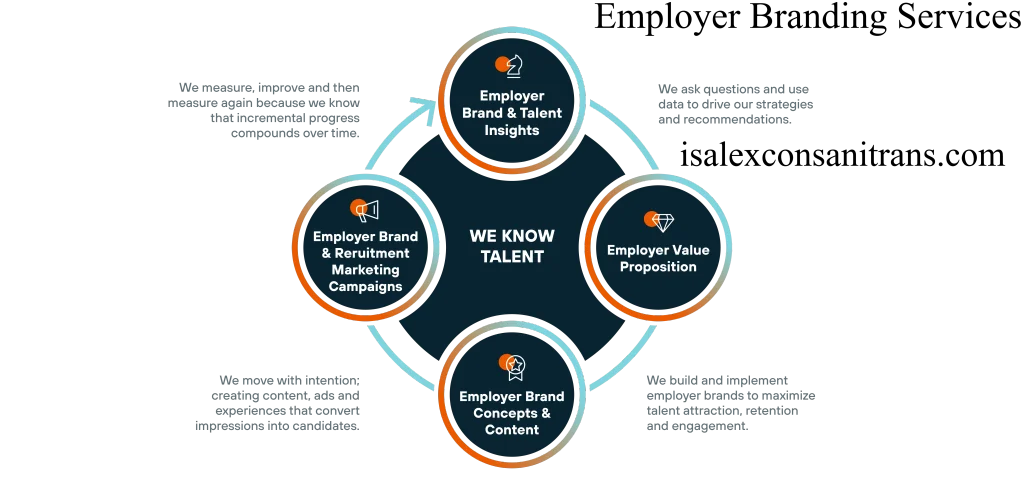
Most providers structure their work around a few core pillars:
1. Employer brand research
Before any messaging is created, agencies typically run internal surveys, competitor benchmarking, and market perception studies to understand how the company is actually seen — by employees, by candidates who rejected an offer, and by the broader labor market.
2. Employee value proposition (EVP) development
The EVP is the foundational promise a company makes to its people: what employees get in exchange for their skills and commitment. This becomes the backbone for every piece of recruitment communication that follows.
3. Employer brand identity and creative
This covers visual identity, tone of voice, and storytelling frameworks — turning the EVP into something that can actually be seen and felt across a career site, job ads, and social channels.
4. Recruitment marketing and content
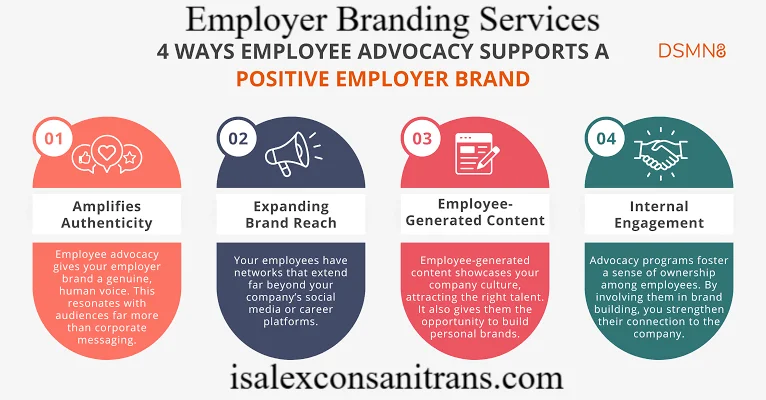
Ongoing execution: recruitment campaigns, career site optimization, employee-generated content, video, and paid or organic social media designed to reach passive and active candidates alike.
5. Candidate experience design
Mapping and improving the candidate journey — from the first job ad impression through interviews to onboarding — so that the brand promise holds up in practice, not just in messaging.
Employer Branding vs. Recruitment Marketing vs. Talent Acquisition
These three terms get used interchangeably, but they’re not the same thing, and understanding the difference helps clarify what you actually need.
| Function | Primary Focus | Typical Output |
|---|---|---|
| Employer branding | Long-term reputation and identity | EVP, brand guidelines, research |
| Recruitment marketing | Promoting open roles and the brand | Campaigns, career site content, social media |
| Talent acquisition | Filling specific roles | Sourcing, screening, hiring pipelines |
In practice, the strongest hiring outcomes come from treating these as connected layers rather than separate departments. An EVP without recruitment marketing never reaches candidates. Recruitment marketing without a clear employer brand identity tends to produce generic, forgettable campaigns. And talent acquisition teams working without either often end up competing on salary alone.
How Employer Branding Services Support Talent Attraction and Retention
Short answer: Employer branding influences both ends of the employee lifecycle — who applies in the first place, and who chooses to stay.
On the attraction side, a clear and differentiated employer brand helps a company stand out in crowded job boards and on employer review platforms, where candidates increasingly check reviews before even applying. On the retention side, employees who joined because the brand promise matched reality tend to have stronger engagement and lower turnover, because there’s less of a gap between expectation and experience.
This is also where AI-powered recruitment tools and recruitment assistants have started playing a bigger role — helping teams personalize outreach, screen applicants against culture-fit criteria, and manage candidate communications at scale, without losing the human storytelling that makes an employer brand distinctive in the first place.
What to Look for When Choosing an Employer Branding Partner
If you’re evaluating providers, a few practical questions can help separate genuinely strategic partners from agencies offering surface-level creative work:
- Do they start with research, or jump straight to design? Strong providers benchmark your current perception before proposing messaging.
- Can they connect employer branding to measurable recruitment outcomes — time-to-fill, application volume, offer-acceptance rate — rather than just brand awareness metrics?
- Do they have experience in your industry? Talent expectations differ significantly between, say, life sciences, tech, and retail.
- Do they offer both strategy and execution, or will you need a second vendor for content, campaigns, and career site work?
- What do former or current clients say? Case studies and named client work are a reasonable indicator of real-world results.
Notable Providers in the Employer Branding and Talent Acquisition Space
Cielo is one of the larger names operating across both talent acquisition and employer branding. Cielo positions itself as a global Recruitment Process Outsourcing (RPO) partner, offering modular RPO, executive search, consulting, and employer branding services alongside proprietary recruitment technology. Its published case studies include work with organizations such as Sanofi, Novo Nordisk, Boehringer Ingelheim, McKesson, Grifols, Becton Dickinson, and ASML, with a particular concentration of experience in life sciences and biopharma hiring.
Universum takes a different approach, focused heavily on employer brand research and education. Its Employer Branding Academy, running since 2014, trains HR and marketing professionals to build, execute, and measure employer branding strategy, and has been delivered in markets including Ireland, Northern Ireland, Portugal, and Serbia through Universum’s local partners.
Other organizations in this space range from full-service employer branding agencies to boutique consultancies specializing in EVP development or candidate experience research. The right fit depends heavily on whether you need ongoing campaign execution, one-off strategic research, or internal training for your own team.
Frequently Asked Questions
What do employer branding services typically cost?
Costs vary widely depending on scope — a research-only engagement to define an EVP can run into the tens of thousands, while an ongoing recruitment marketing retainer with full campaign execution costs considerably more. Most agencies scope pricing around company size, number of markets, and whether creative production and media spend are included.
Best employer branding services — how do I compare providers?
There’s no single “best” provider for every company; the right fit depends on industry, budget, and whether you need strategy, execution, or both. Comparing published case studies, checking client retention (renewed partnerships are a good signal), and requesting a sample research deliverable are practical ways to evaluate fit before committing.
Employer branding services jobs — what roles exist in this field?
Common roles include Employer Brand Manager, Recruitment Marketing Specialist, EVP Strategist, Talent Acquisition Content Creator, and Candidate Experience Lead. These roles typically sit within HR or Talent Acquisition teams, though they increasingly work closely with corporate marketing and communications functions.
What is the Universum Employer Branding Academy?
The Employer Branding Academy is a certification program developed by Universum, a global employer branding research and consulting company. Running since 2014, it teaches HR and marketing professionals the frameworks behind building, executing, and measuring an effective employer brand, and has trained participants across multiple international markets.
What are talent acquisition services, and how do they differ from employer branding?
Talent acquisition services focus on the operational side of hiring — sourcing, screening, interviewing, and placing candidates in open roles, often delivered through Recruitment Process Outsourcing (RPO) models. Employer branding, by contrast, focuses on shaping perception and reputation over time. Many providers, including Cielo, offer both under one roof, since they work most effectively together.
What is Cielo, and what kind of projects does it work on?
Cielo is a global Recruitment Process Outsourcing (RPO) provider offering talent acquisition, executive search, consulting, and employer branding services. Its published case studies show work across industries including life sciences, healthcare distribution, and manufacturing, with named clients such as Sanofi, Novo Nordisk, McKesson, Grifols, and Boehringer Ingelheim.
Has Cielo worked with Amgen?
There isn’t a widely publicized, dedicated Cielo–Amgen case study currently available publicly. Cielo has published extensive life sciences and biopharma work with companies such as Sanofi, Novo Nordisk, Grifols, and Becton Dickinson. Anyone specifically interested in whether Cielo has supported Amgen’s hiring should check Cielo’s official case studies page directly, as client relationships and published case studies are updated regularly.
Author Bio: Hamid Ali is a technology and business writer covering AI, digital transformation, HR technology, and emerging workplace trends. He specializes in breaking down complex topics into clear, practical insights for professionals and modern businesses.
Author Name: Hamid Ali
Email: johanharwen314@gmail.com
Also Read: