Introduction
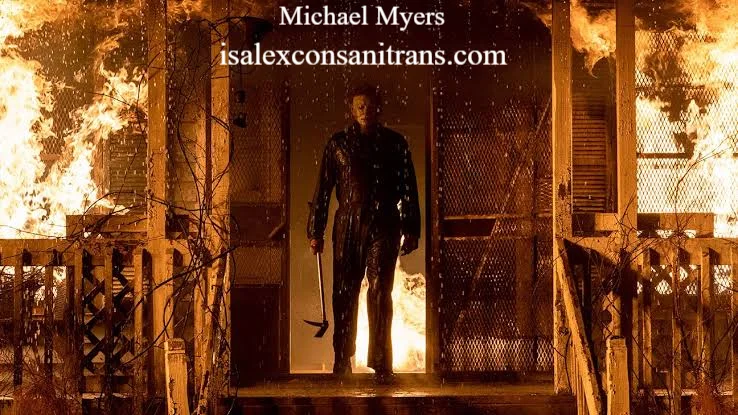
Michael Myers is one of the most recognizable characters in horror cinema. Known simply as The Shape, he first appeared in John Carpenter’s 1978 film Halloween and became one of the defining figures of the slasher genre.
Unlike many horror villains, Michael Myers is rarely portrayed as a character who explains himself. His silence, blank white mask, slow movements, and seemingly unstoppable nature are central to his appeal.
More than four decades after his debut, Michael Myers remains a major part of popular culture. The character has appeared across multiple Halloween timelines, films, games, merchandise, and other media.
In 2026, Michael Myers is again attracting attention through Halloween: The Game, a new survival-horror video game scheduled for release on September 8, 2026. The game allows players to experience the world of Haddonfield from both sides of the horror story, including playing as Michael Myers.
Who Is Michael Myers?
Michael Myers is the fictional antagonist of the Halloween franchise.
He was created by filmmaker John Carpenter and producer/writer Debra Hill. The character first appeared in the original 1978 Halloween movie.
In the original story, Michael murders his teenage sister Judith Myers as a young boy. He is subsequently institutionalized at Smith’s Grove Sanitarium.
Fifteen years later, he escapes and returns to his hometown of Haddonfield, Illinois, where he begins stalking Laurie Strode and other residents.
Michael is often referred to as The Shape, emphasizing that he is presented less like a conventional villain and more like an almost unknowable force of evil.
What Makes Michael Myers So Scary?
Michael Myers is frightening partly because of what the character does not reveal.
He rarely speaks. He does not normally explain his motivations. He often watches his victims from a distance before slowly approaching them.
His visual design also contributes to his horror.
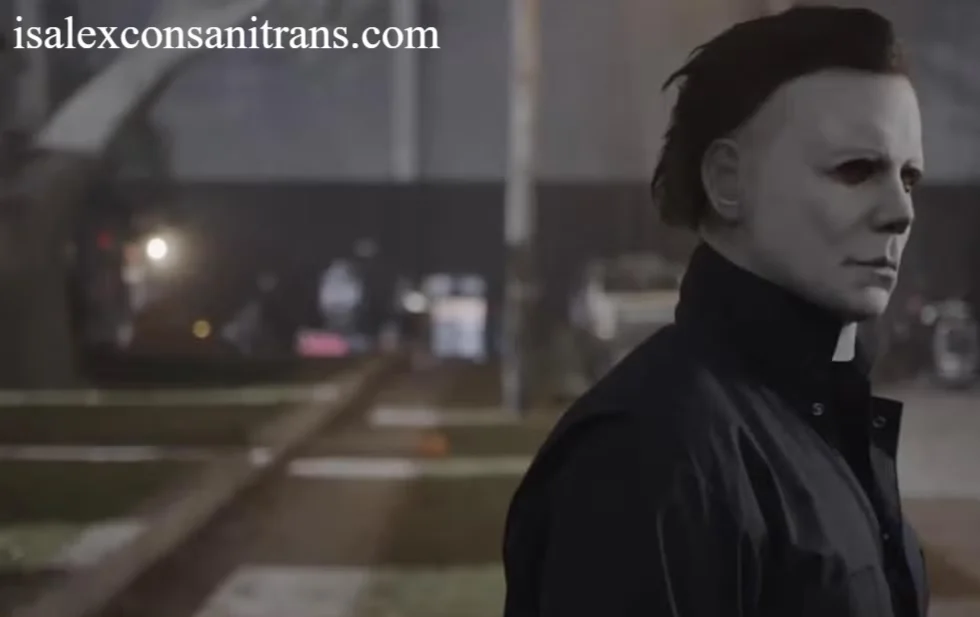
The famous white mask gives Michael an emotionless appearance. Because his face remains hidden, audiences cannot easily determine what he is thinking or feeling.
His slow walking style is another important part of the character. Michael does not always need to run after his victims. Instead, he seems to appear repeatedly wherever they go.
Michael Myers’ Original Mask
The Michael Myers mask is one of the most recognizable horror masks ever created.
For the original 1978 movie, the production famously transformed a commercially available Captain Kirk mask into Michael’s blank white face.
The result became a simple but extremely effective horror design.
The pale face, dark eye holes, and expressionless appearance helped create the impression that Michael was less like an ordinary human being and more like an unidentified presence.
Different Halloween movies have used variations of the mask, but the basic design has remained one of the character’s defining features.
Michael Myers’ Knife
Michael Myers is strongly associated with a large kitchen knife.
The knife became his signature weapon beginning with the original Halloween and has remained one of the character’s most recognizable props.
However, Michael has used other weapons and methods throughout the franchise. His danger comes less from one specific weapon and more from his persistence and ability to stalk his victims.
Who Played Michael Myers?
Several actors have portrayed Michael Myers across the Halloween franchise.
Nick Castle played the adult Michael for most of the original 1978 film. Tony Moran portrayed Michael in the brief face-reveal scene.
Other actors have played or performed Michael in subsequent movies, including James Jude Courtney in the 2018 trilogy.
The character has therefore had multiple performers while maintaining essentially the same visual identity.
Nick Castle has also remained closely associated with the character decades after the original movie.
In the upcoming 2026 video game, Castle is involved in Michael’s motion-capture performance alongside actor and stuntman TJ Storm.
Michael Myers and Laurie Strode
The relationship between Michael Myers and Laurie Strode is one of the central elements of the Halloween franchise.
Laurie was introduced in the original 1978 film, played by Jamie Lee Curtis.
She became Michael’s most famous survivor and opponent.
The two characters were brought together again across several different franchise timelines. Because the series has been rebooted and its continuity changed multiple times, the exact relationship between Michael and Laurie depends on which Halloween timeline a particular movie follows.
In the 2018 trilogy, Laurie again becomes the central survivor facing Michael.
Is Michael Myers Supernatural?
This is one of the most debated questions about the character.
Michael is presented as unusually resilient and capable of surviving injuries that would normally be fatal. Some movies portray him in a more supernatural way than others.
However, the original 1978 film leaves much of his nature ambiguous.
That uncertainty is part of Michael’s appeal. Is he simply an exceptionally dangerous human being, or is there something supernatural behind The Shape?
Different versions of the franchise have provided different answers.
Michael Myers’ Timeline
The Halloween franchise has become complicated because it contains multiple timelines.
Original Timeline
The original continuity began with Halloween in 1978 and continued through several sequels.
H20 Timeline
Halloween H20: 20 Years Later created a different continuity that followed Laurie Strode while disregarding some earlier events.
Rob Zombie Timeline
Rob Zombie’s Halloween and Halloween II created another interpretation of Michael’s story, with a different version of his childhood and relationship with his family.
2018 Timeline
The 2018 film Halloween created another continuity.
In this version, the original 1978 film is treated as the foundation, while many of the previous sequels are ignored.
This timeline continued through:
- Halloween (2018)
- Halloween Kills (2021)
- Halloween Ends (2022)
The different timelines are one reason new viewers can find the franchise confusing.
Michael Myers in Halloween Ends
Halloween Ends was released in 2022 and concluded the most recent film trilogy.
The movie presented Michael as older and physically weakened after the events of Halloween Kills.
The story also introduced Corey Cunningham, creating a different perspective on violence and the influence of Michael Myers.
Jamie Lee Curtis has described Halloween Ends as her final appearance as Laurie Strode, although the broader Halloween franchise is continuing in other forms.
Is Michael Myers Returning in 2026?
Michael Myers is returning to screens in a different form through Halloween: The Game.
The game is being developed by IllFonic, the studio known for asymmetrical multiplayer horror games.
It is scheduled to launch on September 8, 2026, for:
- PlayStation 5
- Xbox Series X|S
- PC
The game includes both multiplayer and single-player experiences. Players can take the role of Michael Myers or play as survivors trying to escape him.
The game’s story expands on the events of the original 1978 Halloween, including Michael’s escape from Smith’s Grove.
What Is Halloween: The Game?
Halloween: The Game is an asymmetrical survival-horror game based on the Halloween franchise.
The basic concept places Michael Myers against a group of survivors.
Players controlling Michael can stalk and hunt other characters, while survivors must work together and use the environment to avoid him.
The game also offers a single-player experience that explores the night of Michael’s escape and his return to Haddonfield.
The developers have introduced a gameplay ability called Shape Jump, designed to represent Michael’s mysterious ability to appear unexpectedly near his victims.
Why Is Halloween: The Game Important for Michael Myers?
The game gives fans a new way to experience Michael Myers.
Instead of simply watching him in a movie, players can control him.
That changes the traditional horror experience because the player becomes responsible for stalking survivors and choosing how to approach them.
The game also expands the world of the original Halloween, adding characters, locations, and gameplay scenarios inspired by the 1978 movie.
Michael Myers in 2026
As of August 2026, there is renewed attention around Michael Myers because of the upcoming video game.
The game’s September 8 release date places Michael back in the spotlight shortly before Halloween season.
The Australian Classification Board has also refused classification to the game because of an in-game drug mechanic that provides a gameplay advantage, creating additional attention around the title.
This controversy is unrelated to Michael Myers’ fictional story but has become part of the game’s 2026 news cycle.
Will There Be a New Michael Myers Movie?
The future of Michael Myers on film is less certain than his video-game future.
The Halloween franchise has continued to develop beyond the 2022 movie, and Miramax obtained rights to develop television projects based on the franchise.
The franchise’s television plans have been described as a creative reset connected to the original film rather than a direct continuation of the most recent movie timeline.
Because plans for future Halloween projects can change, readers should distinguish confirmed releases from rumors about a new Michael Myers movie.
Michael Myers’ Most Important Movies
Some of the most important films featuring Michael Myers include:
- Halloween (1978) — The original John Carpenter classic.
- Halloween II (1981) — Continues the story directly after the first film.
- Halloween III: Season of the Witch (1982) — A major departure that does not center on Michael Myers.
- Halloween 4: The Return of Michael Myers (1988) — Brings Michael back.
- Halloween H20: 20 Years Later (1998) — Returns to Laurie Strode’s story.
- Halloween (2007) — Rob Zombie’s reimagining.
- Halloween (2018) — Reboots the continuity around the original film.
- Halloween Kills (2021) — Continues the 2018 story.
- Halloween Ends (2022) — Concludes the 2018 trilogy.
Why Is Michael Myers Called The Shape?
Michael Myers is called The Shape because the original film’s credits identify the adult character as “The Shape.”
The term reflects the mysterious nature of the character.
He is not presented as a traditional villain who explains his motives. Instead, he functions almost like a physical embodiment of evil stalking the characters.
That concept has remained central to how filmmakers and fans discuss Michael Myers.
Is Michael Myers Human?
The simplest answer is that Michael Myers is presented as human, but the franchise has repeatedly pushed the limits of his physical abilities.
Different films have portrayed him with different levels of supernatural resilience.
The ambiguity is intentional and helps preserve the mystery around the character.
Why Does Michael Myers Kill?
Michael’s motives have never been presented consistently across every Halloween timeline.
The original movie deliberately avoids giving him a simple psychological explanation.
Later films introduced additional ideas about his family, his childhood, or the nature of evil, but these explanations vary depending on the continuity.
For that reason, there is no single explanation that applies perfectly to every version of Michael Myers.
Michael Myers vs. Other Horror Villains
Michael Myers is often compared with other famous horror characters such as Jason Voorhees and Freddy Krueger.
The biggest difference is his presentation.
Jason is strongly associated with Camp Crystal Lake and supernatural resurrection, while Freddy attacks victims through dreams.
Michael is generally more grounded in the physical world and is known primarily for stalking his victims silently.
His simplicity is one of the reasons the character has remained so effective.
Why Michael Myers Remains Popular
Michael Myers has survived more than four decades of changes in horror cinema because his basic concept is simple.
A masked figure.
A knife.
A quiet suburban neighborhood.
A person who refuses to stop.
The simplicity makes Michael adaptable to movies, games, merchandise, Halloween costumes, and fan culture.
His appearance is also immediately recognizable even to people who have never watched every movie in the franchise.
Michael Myers: Quick Facts
- First appearance: Halloween (1978)
- Creators: John Carpenter and Debra Hill
- Character: Michael Myers / The Shape
- Hometown: Haddonfield, Illinois
- Signature mask: White, expressionless mask
- Signature weapon: Kitchen knife
- Most famous survivor: Laurie Strode
- Original adult performer: Nick Castle
- Latest major 2026 appearance: Halloween: The Game
- Game release date: September 8, 2026
- Platforms: PS5, Xbox Series X|S and PC
Frequently Asked Questions
Who is Michael Myers?
Michael Myers is the fictional masked killer from the Halloween horror franchise. He first appeared in John Carpenter’s 1978 film.
Why does Michael Myers wear a mask?
The mask hides Michael’s face and gives him an emotionless, mysterious appearance. The design became one of the most recognizable images in horror.
Who played Michael Myers in the original Halloween?
Nick Castle portrayed adult Michael Myers for most of the 1978 film, with Tony Moran appearing for the brief face-reveal scene.
Is Michael Myers supernatural?
The movies have intentionally left some ambiguity around Michael’s nature. Different timelines portray his physical abilities differently.
Is Michael Myers still alive?
His fate depends on the specific Halloween timeline and movie being discussed. Halloween Ends concluded the most recent film trilogy, while future franchise projects can establish new continuity.
What is the latest Michael Myers game?
The major new 2026 release is Halloween: The Game, developed by IllFonic and scheduled for September 8, 2026.
Can you play as Michael Myers in Halloween: The Game?
Yes. The game allows players to take the role of Michael Myers as well as survivor characters.
When is Halloween: The Game coming out?
The game is scheduled to release on September 8, 2026, for PlayStation 5, Xbox Series X|S and PC.
Is Michael Myers getting a new movie?
The future of the film franchise remains subject to development and changing plans. The franchise is also expanding through other media, including the 2026 video game and television development.
Final Thoughts
Michael Myers remains one of horror cinema’s most enduring characters.
Since his first appearance in John Carpenter’s Halloween in 1978, The Shape has gone through multiple timelines, performers, interpretations, and reboots while maintaining the same basic identity: a silent masked figure who relentlessly stalks his victims.
In 2026, Michael Myers is entering another phase of his long history with Halloween: The Game. The September 8 release gives fans an interactive opportunity to experience Haddonfield and play as the character himself.
Whether the next major chapter comes through a movie, television project, or another game, Michael Myers remains one of the defining figures of the slasher genre.
isalexconsanitrans.com
Email: johanharwen314@gmail.com
Author Name: Hamid Ali
About the Author: Hamid Ali is a film and pop-culture writer who covers horror movies, iconic characters, and the history of genre cinema. He focuses on classic horror franchises like Halloween, explaining their characters, stories, timelines, and latest developments in a simple and engaging way.