Introduction
Here’s an SEO-friendly, engaging introduction for your article “B2B SaaS Explained: Everything You Need to Know in Simple Terms”:
B2B SaaS (Business-to-Business Software as a Service) has become one of the fastest-growing business models, helping companies streamline operations, improve collaboration, and reduce software costs. Instead of installing software on local computers, businesses can access powerful cloud-based tools through a web browser with a simple subscription. Whether you’re a business owner, marketer, developer, or just curious about the term, understanding B2B SaaS is essential in today’s digital world. In this guide, we’ll explain what B2B SaaS is, how it works, its benefits, real-world examples, common challenges, and why it’s transforming the way businesses operate—all in simple, easy-to-understand language.
What Is B2B SaaS?
B2B SaaS refers to software companies sell to other businesses, delivered entirely through the internet rather than installed on a computer. Instead of buying a license and installing a program on your office computers, you simply log in through a browser and start using the tool.
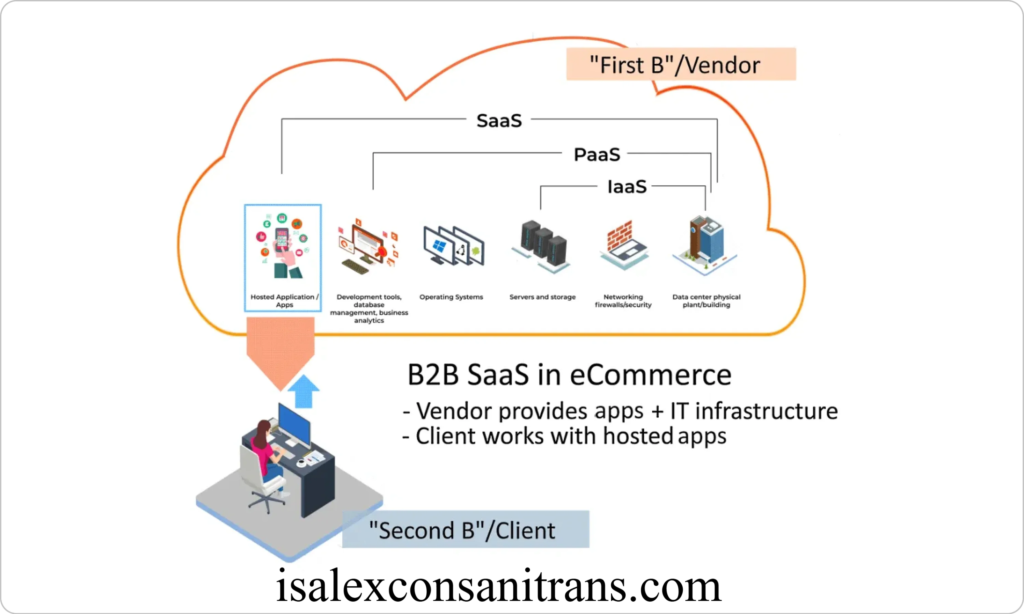
The company that owns the software hosts it on their own servers. You, as the customer, pay a recurring fee to access it. There is no need to manage servers, install updates manually, or worry about hardware compatibility.
Think of tools like Slack, HubSpot, or Zoom. These are all B2B SaaS products. Businesses use them daily to communicate, manage customers, and run operations smoothly.
How Does B2B SaaS Work?
B2B SaaS works on a simple but effective model. A company builds software and hosts it on cloud servers. Businesses then pay a subscription fee, usually monthly or yearly, to use that software over the internet.
Here is a simple breakdown of how it functions:
- The SaaS provider builds and maintains the software.
- The software runs on cloud infrastructure like AWS or Google Cloud.
- Businesses sign up and pay a subscription fee.
- Users access the tool through a web browser or app.
- The provider handles updates, security, and maintenance automatically.
This means your team never has to install anything on individual computers. Everything stays updated in real time, and everyone accesses the same version of the software no matter where they are working from.
Common Examples of B2B SaaS Products
B2B SaaS companies exist in almost every industry today. Here are some well known examples that most businesses use in some form:
- Salesforce for customer relationship management
- Slack for team communication
- QuickBooks Online for accounting
- Zoom for video meetings
- HubSpot for marketing and sales automation
- Asana for project management
- Gusto for payroll and HR
If you have worked in any office in the last decade, you have almost certainly used at least one of these tools. That is the power of B2B SaaS. It fits naturally into daily business operations.
B2B SaaS vs B2C SaaS: What Is the Difference?
People often confuse B2B SaaS with B2C SaaS, but they serve very different purposes.
B2B SaaS is built for businesses. The buyer is usually a company, and often more than one person is involved in the buying decision. Think of a manager, a finance team, and an IT department all approving a purchase together.
B2C SaaS, on the other hand, targets individual consumers. Think of Netflix or Spotify. One person signs up, pays, and uses the product alone.
Here are the key differences:
- B2B SaaS usually has a longer sales cycle. B2C SaaS is often an instant signup.
- B2B SaaS pricing is often based on number of users or usage. B2C SaaS usually has flat pricing.
- B2B SaaS focuses on efficiency and ROI. B2C SaaS focuses on entertainment or personal convenience.
- B2B SaaS often requires onboarding and training. B2C SaaS is designed to be self explanatory.
Understanding this difference matters if you are building a SaaS product or simply trying to choose the right tool for your team.
Key Benefits of B2B SaaS
Businesses are not adopting B2B SaaS by accident. There are real, practical reasons behind this shift.
Scalability
B2B SaaS tools grow with your business. Whether you have five employees or five hundred, most SaaS platforms let you add users and features as needed without switching systems.
Lower Upfront Costs
You do not need to buy expensive servers or software licenses upfront. You simply pay a subscription fee, which makes B2B SaaS budget friendly, especially for startups and small businesses.
Automatic Updates
Your provider handles all updates and bug fixes. You always get the latest version without lifting a finger.
Remote Access
Since everything runs in the cloud, your team can access tools from anywhere. This has become essential with remote and hybrid work becoming the norm.
I have personally seen small teams scale their operations simply because their tools grew alongside them, without any painful software migrations.
Common Pricing Models in B2B SaaS
B2B SaaS companies use a few common pricing structures. Understanding these helps you choose what fits your budget and needs.
- Monthly subscription: You pay a fixed amount every month.
- Annual subscription: You commit for a year, often at a discounted rate.
- Per user pricing: You pay based on how many people use the tool.
- Usage based pricing: You pay according to how much you use the service, such as number of emails sent or API calls made.
Many companies mix these models. For example, a CRM tool might charge per user monthly, while offering a discount if you pay annually.
Major Use Cases of B2B SaaS
B2B SaaS covers almost every business function today. Here are the most common categories.
CRM (Customer Relationship Management)
Tools like Salesforce and HubSpot help sales teams track leads, manage deals, and build customer relationships.
Accounting
Platforms like QuickBooks Online and Xero simplify bookkeeping, invoicing, and financial reporting.
HR Software
Tools such as Gusto and BambooHR handle payroll, hiring, and employee management.
Marketing Automation
Software like Mailchimp and HubSpot Marketing Hub helps businesses run email campaigns and track performance.
Project Management
Tools like Asana, Trello, and Monday.com keep teams organized and on schedule.
Each of these categories shows how deeply B2B SaaS has integrated itself into daily business life.
Who Uses B2B SaaS and Why
Almost every type of business uses B2B SaaS today, from small startups to large enterprises. Sales teams use CRM software. Finance teams use accounting platforms. HR departments use payroll tools. Marketing teams rely on automation software to run campaigns.
Businesses adopt B2B SaaS because it saves time, reduces costs, and removes the burden of managing complex IT infrastructure. Instead of hiring a large IT team to maintain software, companies simply subscribe to a service and let the provider handle everything behind the scenes.
How Do B2B SaaS Companies Make Money?
B2B SaaS companies primarily earn revenue through subscriptions. This creates what is known as recurring revenue, which is the backbone of the SaaS business model.
Two important metrics define this model.
Monthly Recurring Revenue (MRR) tracks how much predictable revenue a company earns every month from subscriptions.
Annual Recurring Revenue (ARR) looks at the same thing but on a yearly scale.
Customer retention plays a huge role here. It costs far less to keep an existing customer than to find a new one. That is why B2B SaaS companies invest heavily in customer support, onboarding, and product improvements to keep users happy and subscribed long term.
Key Factors Businesses Consider Before Buying B2B SaaS
Before choosing a B2B SaaS tool, businesses typically evaluate a few critical factors.
- Security: Is customer data encrypted and protected?
- Integrations: Does it connect smoothly with existing tools?
- Scalability: Can it grow alongside the business?
- Customer support: Is help available when something goes wrong?
- Compliance: Does it meet industry regulations like GDPR or HIPAA?
Ignoring these factors can lead to costly mistakes, so smart businesses always do their homework before signing up.
FAQs About B2B SaaS
What is B2B SaaS? B2B SaaS means software that one business sells to another business through a subscription, hosted entirely in the cloud.
How does B2B SaaS work? Providers host software online, and businesses pay a subscription fee to access it through the internet without installing anything locally.
What are examples of B2B SaaS companies? Popular examples include Salesforce, HubSpot, Slack, Zoom, and QuickBooks Online.
What is the difference between B2B SaaS and traditional software? Traditional software is installed and updated manually, while B2B SaaS is hosted online and updated automatically by the provider.
How do B2B SaaS companies make money? They earn money through recurring subscriptions, tracked using metrics like MRR and ARR.
Is B2B SaaS expensive? Pricing varies widely, but most B2B SaaS tools are more affordable than traditional software because there are no huge upfront costs.
Can small businesses use B2B SaaS? Yes, many B2B SaaS tools are designed specifically for small businesses with flexible, budget friendly pricing.
Final Thoughts
B2B SaaS has changed the way businesses operate, communicate, and grow. From CRM to accounting to HR, nearly every business function now has a SaaS solution built for it. The subscription model makes software more affordable and accessible, while cloud hosting removes the burden of maintenance and updates.
If you are running a business today, understanding B2B SaaS is not optional anymore. It is simply how modern companies work. So the next time you log into your CRM or send an invoice through your accounting software, remember, that is B2B SaaS quietly powering your business behind the scenes.
What tool does your business rely on the most? Think about it, and you might realize just how much B2B SaaS already shapes your daily work.
isalexconsanitrans.com
Email: johanharwen314@gmail.com
Author Name: Hamid Ali
About the Author: Hamid Ali is a content writer who focuses on SaaS, technology, and business software topics. He enjoys breaking down complex tech concepts into simple, practical guides that help business owners make smarter decisions. When he is not writing, he is usually exploring new productivity tools or reading about emerging tech trends.